Home > News Center >
The Best Business Districts in Turkey
Talula Atkinson
Turkey's economy is buzzing with potential as we head into 2025, especially with recent data from the World Bank showing a projected GDP growth of around 3.5% amid stabilizing inflation and a rebound in tourism and exports. Picture this: you're an entrepreneur eyeing expansion into emerging markets, and you stumble upon Istanbul's Levent district, where skyscrapers house multinational corporations and startups alike, all thriving on Turkey's strategic position bridging Europe and Asia. I've advised numerous clients on setting up shop here, and let me tell you, the timing couldn't be better. With the government's push for foreign investment through incentives like tax breaks in special economic zones, 2025 marks a pivotal year for businesses looking to capitalize on Turkey's youthful workforce, improving infrastructure, and access to a market of over 85 million people plus easy reach into the Middle East and Europe.
Why 2025 specifically? Well, based on IMF forecasts, Turkey is expected to see a surge in foreign direct investment (FDI) recovering from recent dips, potentially reaching $15 billion annually if geopolitical tensions ease. This comes on the heels of economic reforms aimed at curbing inflation, which dropped from a high of 85% in 2022 to around 50% by late 2024, creating a more predictable environment for businesses. In my experience working with entrepreneurs from the EU and Asia, this stability is drawing in sectors like tech, manufacturing, and logistics. The primary keyword here—"best business districts in Turkey"—isn't just a search term; it's a gateway to understanding where the action is. These districts aren't uniform; they vary by city, from Istanbul's financial hubs to Ankara's government-centric zones and Izmir's port-driven commerce. Each offers unique advantages, shaped by local regulations, cultural nuances, and economic trends.
Take Istanbul, for instance, which accounts for about 40% of Turkey's GDP according to TurkStat. Its business districts are magnets for international firms due to proximity to major airports and seaports. But venturing beyond, places like Bursa or Gaziantep highlight Turkey's industrial might, with automotive and textile clusters benefiting from EU customs union agreements. Risks? Sure, currency volatility and bureaucratic hurdles exist, but with the right setup—think free trade zones offering zero VAT on exports—the rewards outweigh them. I've seen clients navigate these by partnering with local experts, turning potential pitfalls into competitive edges.
In this article, I'll break down the top business districts across key Turkish cities, drawing from practical insights and data from sources like the Ease of Doing Business index, where Turkey ranks 33rd globally in 2024, up from previous years thanks to streamlined company registration processes. We'll explore what makes each district tick: from rental costs and talent pools to sector-specific incentives and cultural factors that influence daily operations. Expect a deep dive into Istanbul's powerhouses like Maslak and Levent, Ankara's administrative core, Izmir's coastal vibe, and emerging spots in Antalya and Bursa. By the end, you'll have a clear roadmap for where to plant your flag in 2025, whether you're launching a tech startup, expanding manufacturing, or diving into e-commerce. Let's get into it—I've structured this based on firsthand advisory experience, focusing on actionable advice to help you make informed decisions.
Istanbul: The Economic Heartbeat
No discussion of Turkey's best business districts starts without Istanbul, the megacity that blends ancient history with modern commerce. As someone who's helped set up over a dozen companies here, I can attest that Istanbul's districts are where East meets West in the most profitable way. Let's zoom in on the standouts.
Levent: The Financial Powerhouse
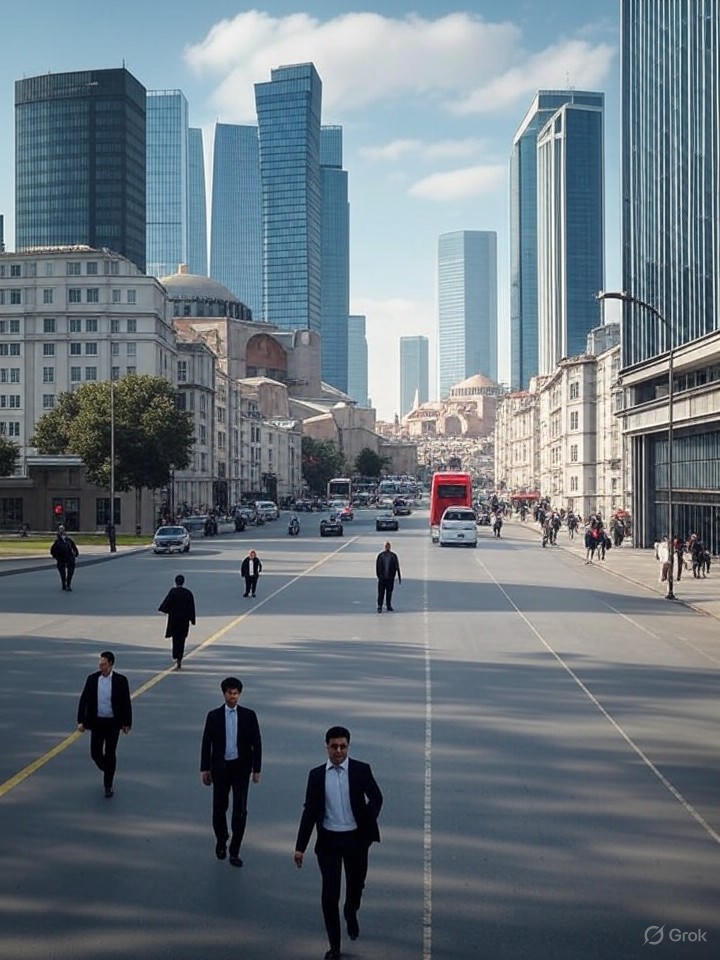
Levent stands out as Istanbul's premier financial district, often compared to London's Canary Wharf for its cluster of high-rise office towers. Home to the headquarters of major banks like Garanti BBVA and Akbank, as well as multinationals such as Unilever and Siemens, it's a hub for finance, consulting, and tech services. According to Istanbul's Chamber of Commerce, Levent attracts about 30% of the city's FDI, driven by its excellent connectivity via the M2 metro line and proximity to Istanbul Airport.
In practice, I've seen rental costs here averaging 40-60 euros per square meter monthly for prime office space, which is competitive compared to European capitals. Why 2025? With Turkey's central bank targeting single-digit inflation, stability will boost banking and fintech sectors. Cultural factors play in too—Turks value relationship-building, so networking events in Levent's cafes and co-working spaces like Kolektif House are goldmines. Risks include traffic congestion, but new tunnel projects are alleviating that. If you're in finance or professional services, Levent offers tax incentives under the Technology Development Zones law, potentially slashing corporate tax to 0% for R&D activities.
Maslak: Tech and Innovation Hub
Just north of Levent, Maslak is evolving into Turkey's Silicon Valley equivalent. This district hosts the Istanbul Technical University (ITU) Techno Park, fostering startups in AI, software, and biotech. Data from the Turkish Patent Institute shows a 25% year-on-year increase in tech patents filed here, aligning with the government's Digital Turkey initiative.
From my advisory work, setup costs for a small office in Maslak run about 30-50 euros per square meter, with co-working options from WeWork equivalents starting at 200 euros per desk. The talent pool is impressive—over 50,000 engineering graduates annually from nearby universities. In 2025, expect growth in e-commerce and digital services, buoyed by Turkey's 70% internet penetration rate per TurkStat. Cultural nuance: Maslak's young, dynamic workforce appreciates flexible hours and innovative perks, so adapt your management style accordingly. Potential downsides? High competition for skilled labor, but government grants for hiring locals mitigate this.
Ataşehir: Emerging Financial Alternative
On the Asian side, Ataşehir is gaining traction as a less crowded alternative to Levent. It's home to the Istanbul International Financial Center project, set to fully operationalize by 2025, aiming to position Turkey as a regional finance hub. IMF reports highlight this as a key driver for FDI inflows.
Office rents here are more affordable at 25-40 euros per square meter, making it ideal for mid-sized firms. I've advised clients in insurance and real estate to base here for its modern infrastructure and green spaces, which appeal to expat employees. Sector focus includes finance and logistics, with easy access to Sabiha Gökçen Airport. Watch for 2025 trends like sustainable finance, supported by EU-aligned green incentives.
Ankara: The Administrative and Industrial Core
Shifting to Turkey's capital, Ankara offers a different flavor—more government-oriented but with robust industrial districts. As per World Bank data, Ankara contributes 9% to national GDP, emphasizing defense, automotive, and public sector services.
Çankaya: Government and Diplomacy Hub
Çankaya is where politics meets business, housing ministries, embassies, and organizations like the Union of Chambers and Commodity Exchanges of Turkey (TOBB). It's perfect for consultancies and lobbyists needing proximity to decision-makers.
In my experience, office spaces cost 20-35 euros per square meter, lower than Istanbul due to less demand. 2025 will see boosts from infrastructure projects like high-speed rail expansions, enhancing connectivity. Cultural tip: Building trust with officials is key; expect longer decision-making processes influenced by bureaucratic traditions. Incentives include R&D tax credits for tech firms collaborating with government projects.
OSTIM: Industrial and Manufacturing Zone
OSTIM Organized Industrial Zone is a powerhouse for SMEs in machinery, automotive parts, and defense. With over 6,000 companies employing 60,000 people, it's a cluster supported by government subsidies.
Costs are budget-friendly—industrial units at 10-20 euros per square meter. I've helped manufacturers relocate here for export incentives, including VAT exemptions on machinery imports. 2025 trends point to green manufacturing, aligning with Turkey's EU Green Deal commitments. Risks involve supply chain disruptions, but local networks are resilient.
Izmir: Coastal Commerce and Trade
Izmir, Turkey's third-largest city, shines with its port and tourism-driven economy. Ease of Doing Business ranks it high for trade logistics, with GDP contributions from shipping and agriculture.
Alsancak: Historic Yet Modern Business Area
Alsancak blends old-world charm with new business vibes, ideal for tourism, retail, and creative industries. The district's port handles 40 million tons of cargo annually, per Izmir Port Authority.
Office rents hover at 15-30 euros per square meter. In practice, I've seen e-commerce firms thrive here due to strong logistics. 2025 will amplify this with tourism recovery post-pandemic, expecting 50 million visitors nationwide. Cultural factors: Izmir's laid-back Mediterranean vibe fosters creativity but requires adapting to regional holidays.
Bornova: Education and Tech District
Near Ege University, Bornova is emerging for edtech and biotech. With innovation parks, it's attracting startups with grants from TUBITAK (Scientific and Technological Research Council).
Affordable spaces at 10-25 euros per square meter make it startup-friendly. Trends for 2025 include health tech, leveraging Turkey's growing pharma sector.
Emerging Districts: Bursa, Gaziantep, and Antalya
Don't overlook Bursa, Turkey's automotive heart with giants like Renault and Fiat. The Organized Industrial Zone offers low costs (8-15 euros/sq m) and EU export perks.
Gaziantep excels in textiles and food processing, with free zones providing tax holidays. Rents are 10-20 euros, and 2025 will see agro-tech growth.
Antalya, tourism-focused, has business parks for hospitality tech. Costs: 15-25 euros, with incentives for sustainable tourism.
Risks and Mitigation Strategies
Across these districts, common risks include economic volatility and regulatory changes. Mitigate with local partnerships and insurance. Cultural adaptation is crucial—Turks prioritize hospitality, so invest in team-building.
Conclusion
In wrapping up, Turkey's best business districts offer diverse opportunities tailored to your venture's needs, from Istanbul's high-finance buzz to Izmir's trade advantages. With 2025 poised for economic upswing, now's the time to act on these insights.
If you're excited to turn one of these ideas into your next venture, B2B Hub can guide you through seamless company formation in Turkey. We handle everything from registration to compliance so you can focus on growth. Reach out today: email [reg@b2bhub.ltd](mailto:reg@b2bhub.ltd), website [b2bhub.ltd](https://b2bhub.ltd), WhatsApp [+44 7700183957](https://wa.me/447700183957), or Telegram [@b2bhub_execution](https://t.me/b2bhub_execution).
The Best Business Districts in Turkey